


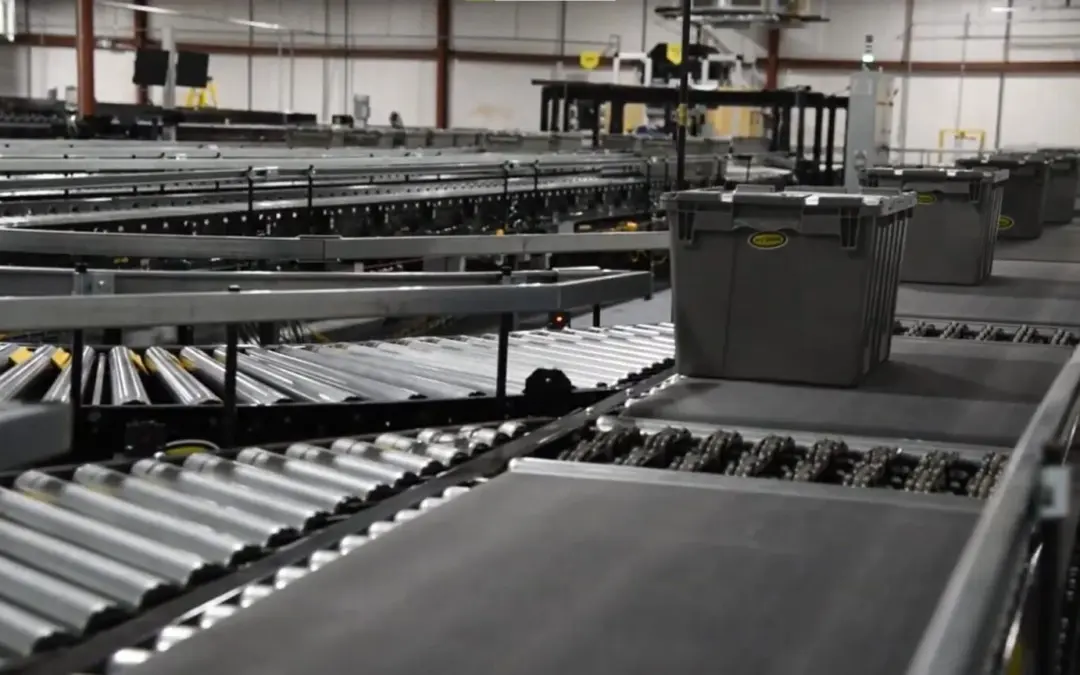
You can add a conveyor to a warehouse that is still shipping orders. The method is to install it one section at a time, test each section before it carries live product, and only then retire the manual process it replaces. Most retrofit trouble comes from skipping the layout work up front, not from the install.
Managers who call about a retrofit are rarely worried about the equipment. They are worried about the week the dock backs up because a crew is working in the main aisle. This guide covers how to avoid that, from the first walkthrough to the last section going live. It applies to a single 40 foot run between packing and shipping as much as to a full system, in buildings of any age across Massachusetts and Connecticut. If you want to talk through your layout first, contact the Maybury team.
When a Conveyor Starts to Make Sense
The case for a conveyor usually shows up on the floor before it shows up in a report. Look for patterns like these:
- A picker walks 150 feet to drop off a tote and 150 feet back. Forty trips a shift adds up to about 45 minutes of walking.
- A forklift driver stops what they are doing to move a few cartons that one person could slide down a line.
- Pack stations sit idle, then get flooded when a batch arrives all at once.
- Someone on the team lifts totes onto carts all day, and it is starting to show.
Two or more of these usually points to a conveyor. The next question is how to add one without losing production days.
Can You Install a Conveyor While the Warehouse Keeps Running?
Usually, yes. Conveyors are built from standard sections that bolt together, so a crew can install one zone, test it, and move on to the next. The existing process keeps running until the new zone passes its test.
Work near busy areas can often be scheduled for off-shifts, weekends, or slower stretches of the week. How long it takes depends on the length of the run and what it crosses, so have an installer walk the building before anyone commits to a date. Maybury’s conveyor team handles design, installation, and service, so one team stays involved from the first walkthrough through support after the install.

Step 1: Follow One Product From Receiving to the Truck
Pick a single product or tote and trace its path through the building. Write down every place it sits, gets picked up again, or waits on a person. Those spots are your candidates for a conveyor.
A 60 foot line that removes the worst handoff will usually do more than a longer line built where the install is easiest. This list also tells you what belongs in phase one.
Step 2: Measure What Is Already in the Way
A new building gives you a clean slate. An existing one does not. Before settling on a route, check:
- Aisle widths and the spots where forklifts need room to turn.
- Columns, door swings, and dock traffic.
- Sprinkler heads and light fixtures overhead.
- Slab condition where supports or anchors will go.
If a forklift route crosses the line, plan the crossing now with a gap or a lift-out section. Cutting one into a running line later is much harder. If your layout is already tight, Maybury’s warehouse design team can check how the line fits with your racking and traffic before anything is ordered.
Step 3: Match the Conveyor to the Job
Most buildings end up with more than one type. Gravity lines move product by a slight incline and a push from the operator. Maybury carries gravity roller and skatewheel conveyors for that work, and skatewheel tends to suit lighter cartons and totes. Where product needs to be carried or spaced under power, the options include slider bed belt conveyors, power belt systems, and the Hytrol E24.
A simple starting rule: use gravity where an operator is already handling each item, and go powered where you need steady speed or longer runs. The guide to choosing the right conveyor system goes deeper on matching a type to your product.
Step 4: Plan Around Racking, Mezzanines, and Equipment Already on the Floor
Racking decides where a line can run and where product can stage at each end. A conveyor that ends in front of a pick face with no room to stage totes will back up on its first day. Forklift paths decide where the crossings go.
If a mezzanine is planned, decide now whether product will move between levels, since that changes the height of the line and what supports it. Our post on space optimization with mezzanines and modular offices covers how added levels change product flow, and Maybury’s pallet rack and storage team can confirm that a new line and your storage layout work together.
Not sure where the first section should go? Contact Maybury to set up a walkthrough before you commit to a layout.

How a Phased Installation Works
A phased install breaks one big project into pieces your crew can absorb. A typical sequence looks like this:
- Drawings for the whole system. Even if it is built in stages, every section needs to line up with the next.
- Sections prepared ahead of time. That keeps the time spent on your floor short.
- One zone at a time. The rest of the building keeps running around it.
- A test with real product. The old process stays in place until the new zone passes.
- Operator training on that zone. It happens before the zone takes live volume.
- Repeat for the next zone.
The payoff is that surprises show up on a 40 foot section and not on a finished system.
Leave Room for Automation You Might Add Later
Even a plain gravity line should be laid out as if powered sections could join it later. Check that power is reachable along the route, and keep the ends of the line open. A line that stops at a wall cannot be extended. One that ends in open floor can.
Sensors and controls are far easier to add to a layout that planned for them. For the bigger picture on where conveyors fit in an automated warehouse, see our posts on how automation is transforming warehouse operations and warehouse automation and inventory management.
Safety and Service After Installation
Pinch points sit at the drive and return ends and at transfer points, and guarding needs to be in place before the line carries live product. Clearing a jam is the moment people tend to reach into equipment, so shutdown procedures matter most then. Lockout and tagout should be part of training before go-live, and Maybury offers lockout/tagout training for teams that need it.
After the install, belts, rollers, and drives need regular inspection so a worn part does not stop the line on a busy day. The Maybury conveyor service team supports systems after installation.
What to Have Ready Before You Call
You do not need a finished plan. These details make the first conversation far more useful:
- The size and weight of the products you move.
- Daily volume, and how much it swings at peak.
- A current layout drawing, or a rough sketch of the building.
- Your target throughput and where the current process slows down.
- Operating hours, and when install work would cause the least disruption.
Rough numbers are enough to suggest a starting point and an order for the phases.
Frequently Asked Questions
Can a conveyor be installed without stopping production?
In most cases, yes. A phased install builds the system in sections while the existing process keeps running, and work near busy areas can often be scheduled for off-hours.
How long does a conveyor installation take?
It depends on the length of the run, the conveyor type, and what the line crosses. A short gravity run is a much smaller job than a multi-zone powered system, and a walkthrough gives you a realistic estimate.
Can I add a conveyor to an existing racking layout?
Yes, provided the route leaves room for aisles, forklift paths, and staging at each end. Have the design reviewed alongside your racking before anything is ordered.
Can a conveyor system be expanded later?
Yes. Sections are modular, so a line can grow with the operation, especially when the original layout left its ends open.
Do I need to automate right away?
No. Many facilities start with a gravity or belt line and add powered sections or controls later. Planning for that now makes the upgrade easier.
Start Planning Your Conveyor Upgrade
A conveyor does not have to cost you production days. Trace one product’s path, measure what is in the way, match the conveyor type to each zone, and leave the ends of the line open for later. Do it in sections and the rest of the building keeps shipping.
Maybury designs, installs, and services conveyor systems for facilities across Massachusetts and Connecticut. Contact the Maybury team to talk through what a retrofit could look like in your building.